Witnesses of War
Voices of the past. Lessons for the future.
History does not simply belong to the past — it actively shapes the present and influences the future. The events of the 20th and 21st centuries have demonstrated, time and again, the devastating consequences of war, authoritarianism and societal division. Yet as generations pass, firsthand witnesses to these events are gradually lost. Preserving their voices has never been more urgent.
Witnesses of War is a nonprofit organization dedicated to documenting, preserving and sharing the lived experiences of individuals who witnessed major conflicts and regimes of modern history. Our mission is to ensure these testimonies remain accessible to future generations and serve as a powerful educational tool.
What We Do
We conduct in-depth interviews with veterans and survivors, transforming their stories into educational videos enriched with archival materials and historical research. By combining personal narratives with a broader historical context, we create engaging resources for students, educators and the wider public.
All recorded footage is securely archived with Memory of Nations, one of Europe’s largest oral history archives, with more than 20,000 preserved testimonies. These records are permanently preserved and made accessible to researchers, scholars and the public, ensuring their long-term academic value. As our colleagues there aptly put it, it is easy to forget — which is precisely why these testimonies must not fade away.
Beyond archiving, we produce documentaries and educational videos for schools, history teachers and public programmes. We collaborate with leading institutions, including the Czech Military History Institute (VHÚ), Czech Television and Czech Radio. Our work with Czech Radio includes Paměťová stopa (Memory Trace), a project that brings stories connected to Czechoslovakia to audiences ranging from hundreds of thousands to millions. We also worked with Czech Radio on a series of previously untold Second World War stories to mark the 80th anniversary of the end of the war — a collaboration that continues in the years ahead.
To reach younger audiences, we share content through digital and social media platforms, including Instagram, where we have more than 50,000 followers. Short-form videos bring these stories to life for new generations. We also organise educational programmes and guided tours at significant historical sites across the Czech Republic, welcoming groups from schools, universities such as the University of Utah and Syracuse University, and organisations such as the Association of Jewish Refugees.
Our Vision
We use firsthand testimonies to strengthen historical understanding, critical thinking and empathy, helping to build a more informed and responsible society.
As part of this mission, we are developing a new educational tool about Auschwitz (2026–2029). Designed for students and teachers in the Czech Republic, with plans for international expansion, it is grounded in real testimonies and intended to make a lasting educational impact.
Impact
Between 2016 and 2026, we conducted more than 850 interviews, documenting the experiences of:
- Survivors of oppression and persecution, including Holocaust and Gulag survivors and political prisoners
- Veterans of major twentieth-century conflicts, including the Second World War, the Korean War, the Vietnam War and the Spanish Civil War
- Participants in contemporary conflicts, including the wars in Afghanistan and Iraq
Each testimony offers a unique perspective that contributes to a deeper, more human understanding of history.
Founder
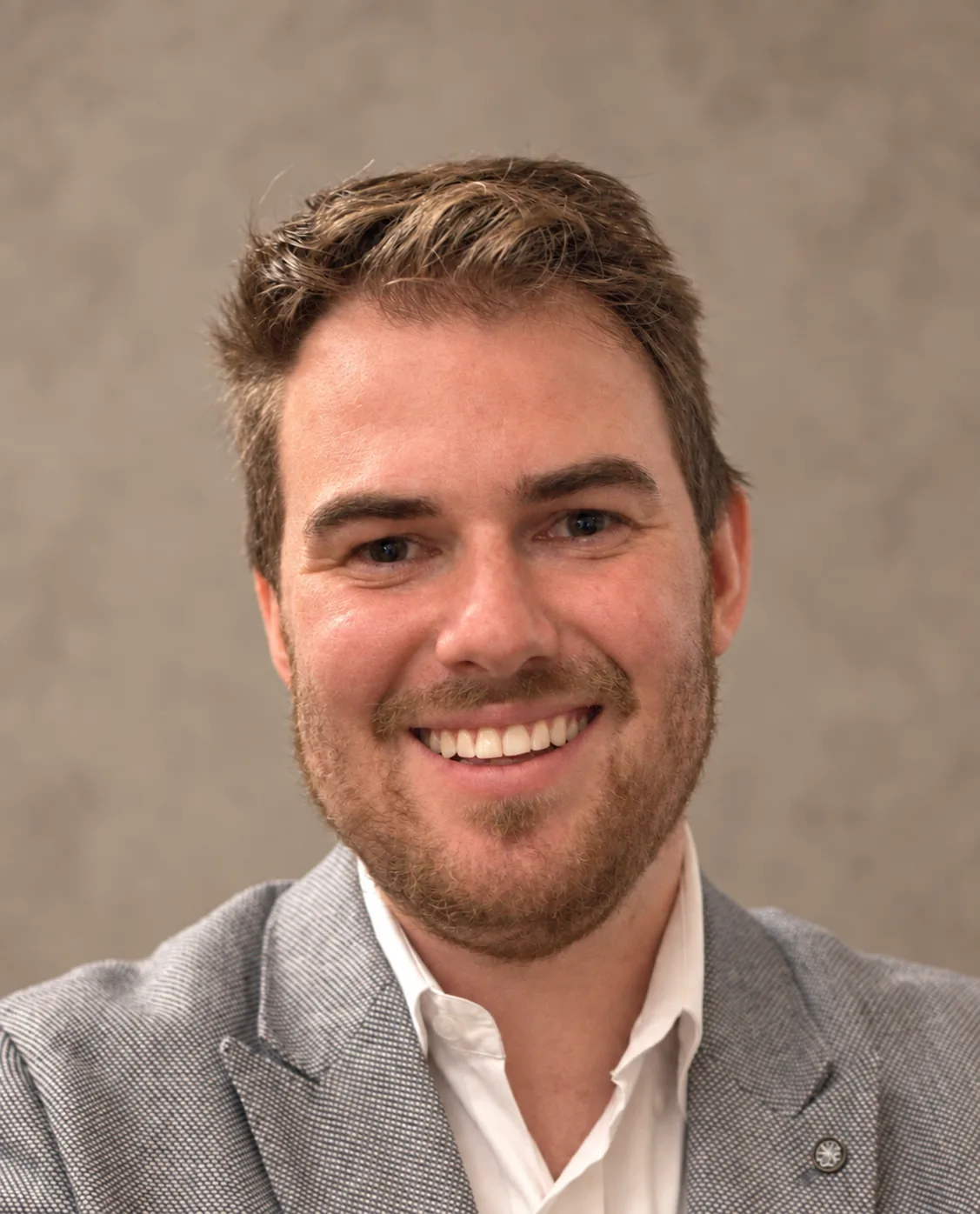
Founded by historian Jiri Kluc, Witnesses of War draws on years of academic research, fieldwork and experience in oral history and education.
My name is Jiri Kluc. Born and raised in the Czech Republic, I am a historian with a deep interest in twentieth-century history, particularly the Second World War. My books have received several national awards, reflecting my commitment to researching and sharing the past.
My work has been featured in international and national media, including The Washington Post, the Chicago Sun-Times, Newsday and The Gazette, as well as Czech Television and Czech Radio.
A graduate of Charles University in Prague, I focus my academic research on the history of Czechoslovakia and Central Europe during the twentieth century. I am the author of numerous books on the Second World War and the Holocaust.
I did not initially plan to become a tour guide. However, my historical research uncovered so many compelling stories that I wanted to share them beyond the page. This led me to guide visitors through Prague and other historic sites in the Czech Republic, bringing the people and events of the past into focus.
How It Started
Holocaust Survivors
My journey in preserving the stories of Holocaust survivors began when I was 16 years old. At that time, my hometown still had a few survivors left, whom I visited and assisted as a volunteer, helping with their care and everyday needs. They opened up to me and shared their stories of surviving concentration camps. However, I never recorded their testimonies. During the COVID-19 pandemic, I realised that many of these survivors had passed away, and with them, their invaluable stories were lost. That realisation became a turning point — I decided that, regardless of the time and financial cost, I must do everything in my power to honour their legacy.
I started in the Czech Republic, meeting nearly all the remaining Holocaust survivors there. Then I decided to try to find all the Terezín/Theresienstadt survivors around the world to preserve their stories for future generations. I also started working as an accredited guide at the Terezín Memorial, sharing my knowledge with tourists visiting the site of the former largest Nazi concentration camp in what is now the Czech Republic. I also became a guide in Jewish Prague.
I not only research concentration camps but also delve into the incredible stories of the so-called Kindertransports. Nicholas Winton helped save 669 children, primarily of Jewish origin, through eight train transports from Prague. I have had the honour of meeting children saved by Nicholas Winton and researching their stories at the British National Archives. Perhaps this sounds familiar to you: the film One Life depicts this remarkable story.

World War II Veterans
My journey in preserving the stories of World War II veterans began when I was 15 years old. At that time, my country still had a few surviving heroes, whom I visited and assisted as a volunteer. However, I never recorded their testimonies. During the COVID-19 pandemic, I realised that many of these veterans had passed away, and with them, their invaluable stories were lost. That realisation became a turning point — I decided that, regardless of the time and financial cost, I must do everything in my power to honour their legacy.
I started in the Czech Republic, meeting nearly all the remaining veterans there. Then I had the opportunity to travel to the United States, where I conducted interviews with 35 veterans in Iowa and Illinois — half of whom had never shared their stories before. At that moment, I thought to myself: if I, as a foreigner, do not preserve these stories, who will?
Since then, my research has taken me across the United States, Canada, the United Kingdom, Australia, France, the Netherlands, Belgium, Uzbekistan, Slovakia, Poland and Spain. To date, I have met and documented the experiences of over 600 World War II veterans and Holocaust survivors.
I have also worked to uncover the stories of forgotten veterans from my homeland, Czechoslovakia, and honour their lives. One such veteran, Ervin Hoida, was 104 years old when I discovered his story. To celebrate his 105th birthday, I wrote a book about his life and collected birthday cards from around the world — a gesture he told me he would never forget. The book was titled The Last of the Heroes: The Story of a Czech Jewish Soldier on the Western Front.
In December 2024, I did the same for Antonín Fajkus, the last living Czech fighter pilot from World War II at the time. Alongside a book and other gifts, I personally delivered nearly 1,000 birthday cards to his home in Chicago — one of which came from the President of the Czech Republic.
For his 102nd birthday, I organised a similar tribute for Jiří Švenger, a forgotten Czechoslovak RAF veteran living in Australia who served with No. 311 (Czechoslovak) Squadron RAF towards the end of World War II. He received hundreds of birthday cards from schoolchildren, and I gave him a book of his memoirs titled With the Czechoslovakia Shoulder Patch: The Story of a Czech Jewish Soldier in the RAF.
Most recently, as part of my work to discover unknown veterans from my homeland, I honoured Harry Arnstein, who now lives in New York, USA. He has a remarkable story: he survived several years in the Italian concentration camp Ferramonti and, after liberation, served in the British and Czechoslovak armies and took part in the siege of the French port of Dunkirk in 1944–1945. He received over 400 thank-you cards from schoolchildren, and his memoirs were also published under the title From the Concentration Camp to the Army.
