
Holocaust survivors
Peter Metzelaar
Born 26 October 1935
A Hidden Child Smuggled to Safety by His Mother
 Netherlands
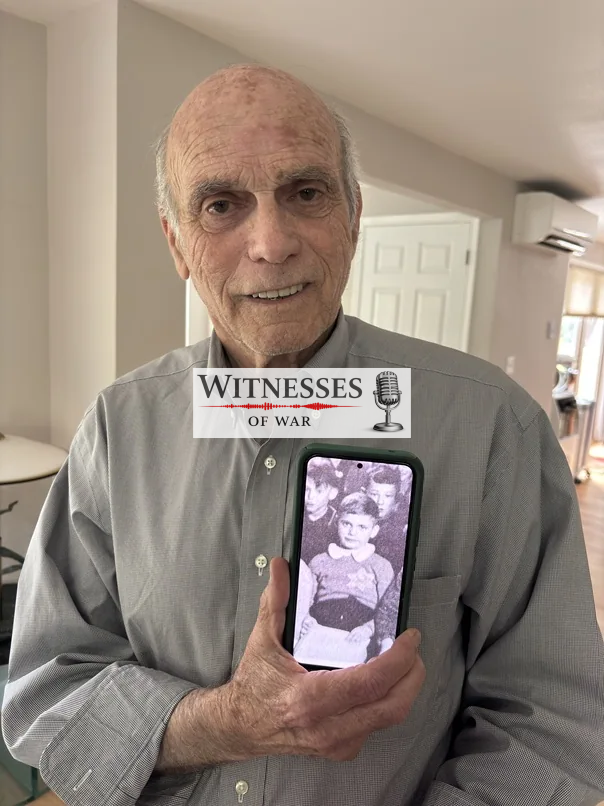
Peter “Pete” Metzelaar was born Ralph Alex Peter Metzelaar on 26 October 1935 in Amsterdam, the Netherlands. He was the only child of Simon Metzelaar, a clothing manufacturer, and Elli Rübner. During the German occupation, his father and grandparents were arrested. Simon was murdered at Auschwitz in August 1942, while Pete and his mother escaped deportation by going into hiding.
With help from the Dutch resistance, they found shelter with Klaas and Roefina Post, who risked their lives to protect them on their farm in northern Netherlands. Pete could venture outside only after dark. As German searches intensified, he and his mother concealed themselves beneath the farmhouse floorboards. Klaas also helped create a camouflaged underground shelter in nearby woodland, where they could hear soldiers searching the farm while fearing that the earth above them might collapse.
Eventually, the resistance arranged another hiding place with two women in The Hague. When Elli discovered that the women intended to betray them, she devised an escape. Using bedsheets, she sewed herself a nurse’s uniform and approached a German military convoy, claiming she was taking an orphaned boy to Amsterdam. Speaking fluent German, she persuaded the soldiers to give them a ride. Mother and son reached Amsterdam and survived in hiding until liberation in 1945.
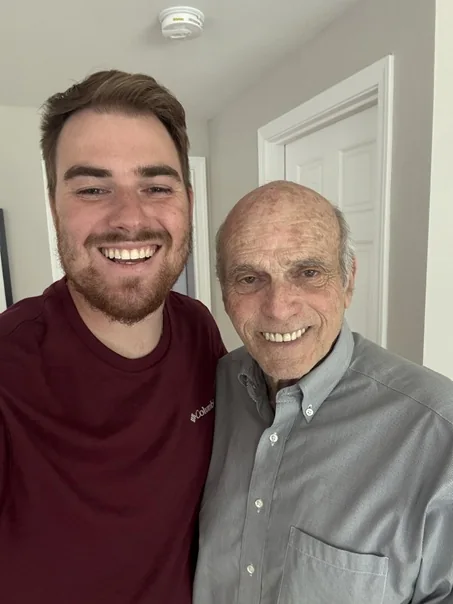
In 1949, Pete and his mother emigrated to the United States, arriving in New York. He was thirteen and spoke no English. He later built a long career as a radiology technologist, raised a family and moved to Seattle in 1997. Klaas and Roefina Post were recognized by Yad Vashem as Righteous Among the Nations for saving their lives.
A return to the farm and his woodland hiding place in 1992 prompted Pete to begin speaking publicly the following year. Through the Holocaust Center for Humanity, he has shared his experiences with students and community audiences, emphasizing tolerance, independent thought and the courage to help others.
← Back to all stories